
Upholstery Care
How to Keep Your Sofa Clean Between Professional Cleanings
Movie-night crumbs, the dog’s favorite cushion, and an occasional coffee spill. Your sofa gets used. Here’s a routine that fits real life.

You can usually tell which seat is everyone’s favorite. It’s where the remote lives, where snacks land, and where someone inevitably falls asleep halfway through a show.
Keeping that sofa presentable doesn’t require a bottle of cleaner every weekend. Start with dry maintenance, respond to spills promptly, and let the furniture’s care instructions guide anything more.
1. Find the tag before you find the cleaner
Look beneath a seat cushion or under the furniture. Take a photo now, while you’re thinking about it—future you will appreciate having it when a drink tips over.
| Code | What it generally means |
|---|---|
| W | Suitable water-based upholstery spot cleaners, used as directed. Avoid soaking. |
| S | Water-free solvent cleaning. Do not use water; seek guidance before treating a spot. |
| WS / SW | Specified water-based or solvent products may be suitable. Follow the fabric’s instructions. |
| X | Vacuuming or light brushing only. No water-based or solvent cleaners. |
A code is not permission to use any household cleaner. If the tag is missing or unclear, stick to gentle dry care and contact the manufacturer or a qualified upholstery cleaner.
2. Make vacuuming part of the room reset
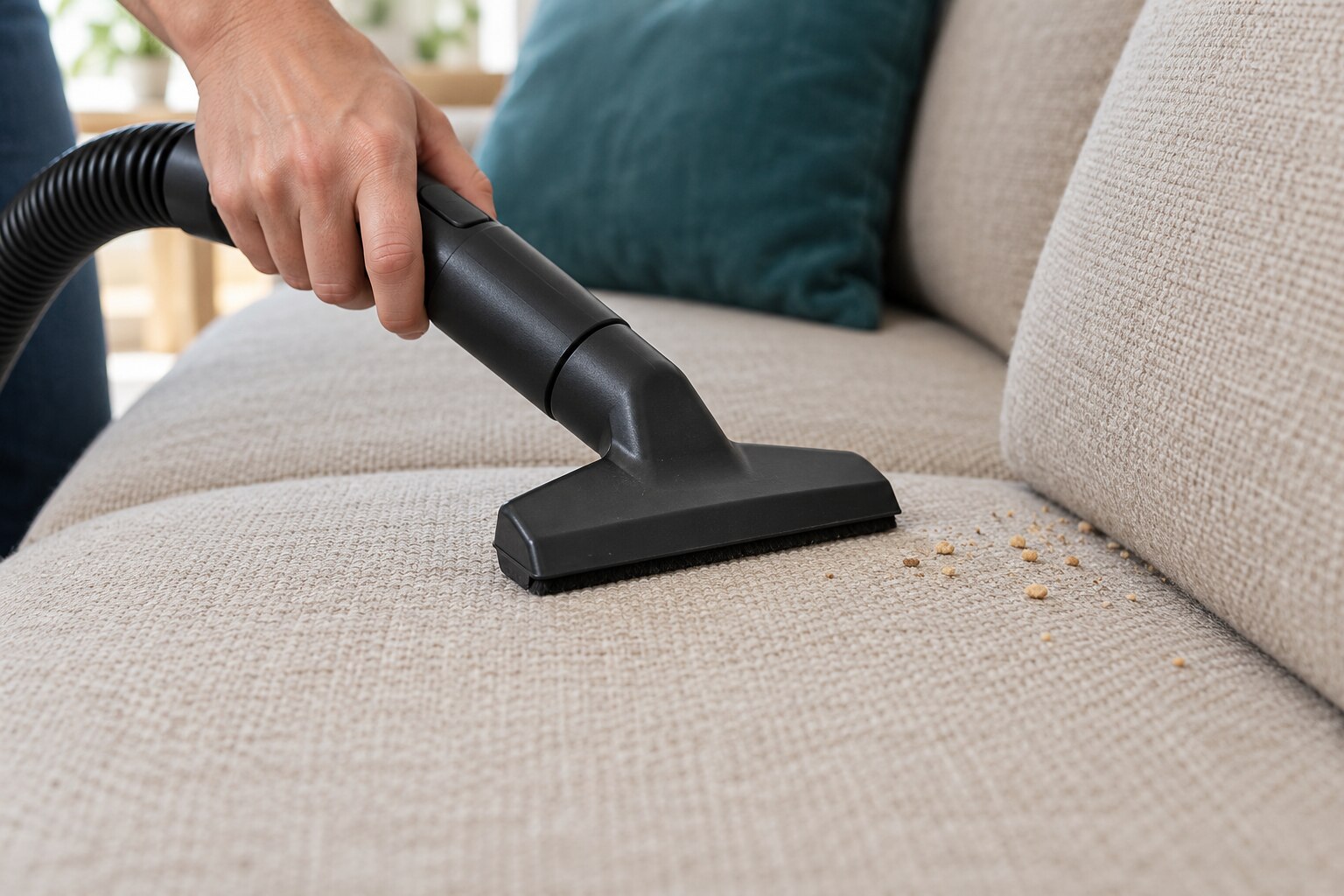
When you vacuum the living room, give the sofa a turn too. A weekly check is a practical starting point; a pet’s favorite seat or a busy family room may need attention sooner.
Use an upholstery attachment suitable for the fabric, with gentle suction. Cover the seats, arms, and back, then the seams and gaps where crumbs collect. Lift loose cushions only if they are designed to be removed. Avoid aggressive powered brushes on delicate fabric.
3. Handle the spill—not the whole cushion
For a fresh liquid spill, gently blot with a clean, dry white cloth. Use a fresh section as it absorbs liquid. Resist the urge to scrub or pour water into the cushion.
Before spot treatment, check both the care tag and product directions. Test an approved product in a hidden area first and allow the test to dry. Stop if color or texture changes. If the manufacturer permits damp treatment, keep moisture limited and leave the seat unused until fully dry.
There’s no universal vinegar, dish-soap, or steam-cleaner recipe for every sofa. When you’re unsure, a photo of the spill and the tag is a better next step than experimenting.
4. A zipper doesn’t mean machine washable
It’s tempting to unzip a cover and toss it in with the towels. Don’t assume that’s safe. Some manufacturers specifically prohibit removing and laundering cushion covers. Only wash them when the furniture’s instructions explicitly allow it.
A separate washable throw can be an easier option for the dog’s usual spot or a well-used arm. Choose one that won’t transfer color, wash it according to its own label, and let it dry fully before putting it back.
5. Notice when maintenance isn’t enough
A seat that still looks soiled after vacuuming, a stubborn stain, or a smell that returns is a reason to ask for an assessment. Repeated spot treatments can leave you guessing about what is actually in the fabric.
Tell us what happened, when it started, and which products you’ve used. With pet accidents, mention whether liquid soaked into the cushion. Cleaning the surface may not address contamination in the filling, and some stains, fading, or wear can be permanent.
There isn’t one calendar that fits every sofa. Let its fabric, condition, use, and manufacturer’s guidance shape the timing of professional cleaning.
Care references
For cleaning codes and fabric precautions, consult these manufacturer guides and your own furniture’s instructions.
Photos are AI-generated illustrations of home care, not customer jobs or before-and-after results.