
Carpet Care
What to Do Immediately After a Carpet Spill
A knocked-over mug doesn’t have to ruin your afternoon. Here’s what to do before you reach for the stain remover.
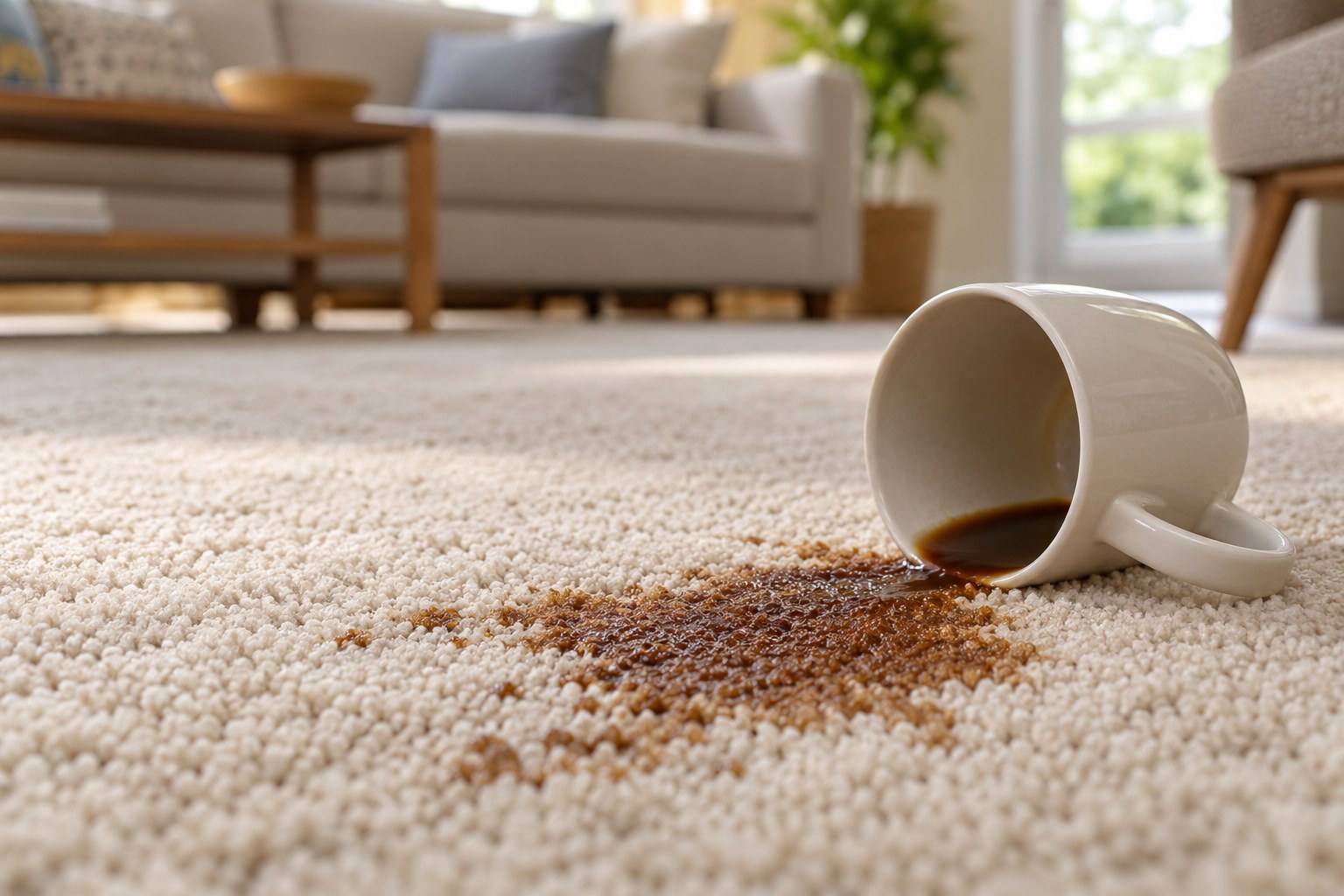
The mug tips. Coffee lands on the carpet. You grab whatever towel is closest and start scrubbing.
That last part is worth changing. A spill needs quick attention, but rubbing can leave a fuzzy patch even after the color fades. Your first move is simpler: pick up a clean white towel and absorb what you can.
1. Clear the mess without spreading it
Move the cup or plate out of the way. If there’s sauce, food, or another thick spill, gently lift the excess with a spoon. Avoid pressing it into the carpet.
Keep people and pets off the area while you work. You don’t want one small spill turning into a trail across the room.
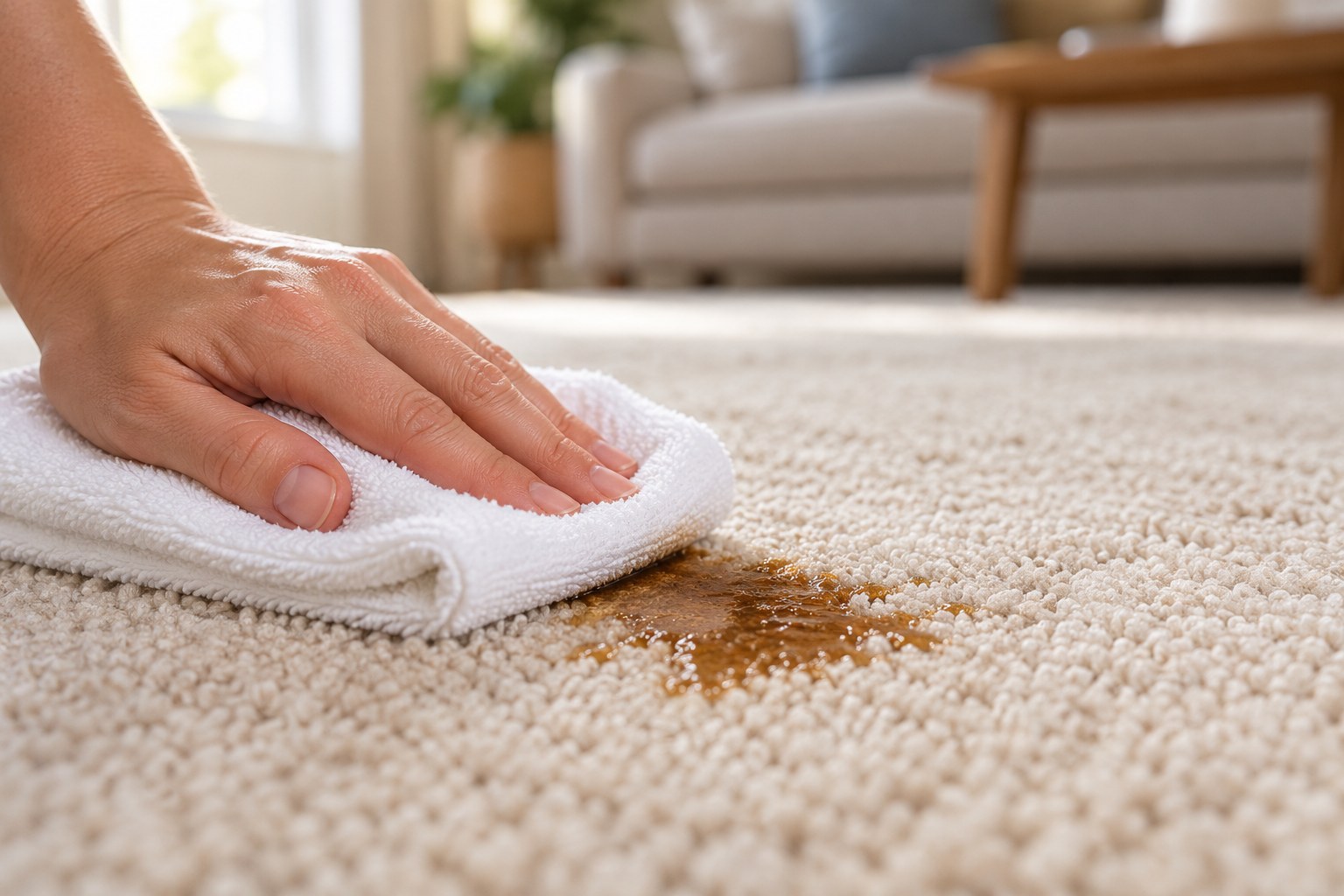
2. Blot with a dry white towel
Fold a clean white absorbent cloth or use plain white paper towels. Press down, lift, and move to a dry part of the towel. Repeat while it’s picking up liquid.
Start around the outside and work inward. Think of lifting the liquid out, rather than chasing the spot across the carpet. Skip colored towels: their dye can transfer onto damp fibers.
A small spill may take several fresh towels. That’s a better next step than scrubbing harder.
3. Pause before adding anything else
Once you’ve absorbed the excess, check the care guidance for your carpet and the specific spill. If you don’t know the fiber or manufacturer, stop after blotting and ask for advice before experimenting.
If the care instructions allow water-based spot cleaning, try a little clean water on a white cloth after testing in an inconspicuous area. The cloth should be damp, not dripping. Blot gently, then absorb the moisture with a dry towel.
Don’t pour a glass of water over the spot. You’re treating a small area, not washing the whole carpet.
4. Use a suitable spot cleaner only if needed
If a mark remains, choose a carpet spot cleaner permitted by your carpet manufacturer and intended for that spill. A CRI Seal of Approval product is a useful starting point, but it still needs a hidden-area test.
Follow the label’s amount and contact time. Don’t combine products or keep adding more because the first attempt didn’t work. When the instructions call for rinsing, use small amounts of clean water on a fresh cloth to remove residue, then blot dry.
Leave kitchen sprays and bleach under the sink. A product that cleans a countertop can permanently damage carpet.
5. Absorb the remaining moisture
Use fresh dry white towels to lift what’s left. Your manufacturer may recommend placing several layers over the spot and weighing them down with a clean object that won’t transfer color, such as a plastic jug of water.
Keep the area clear until it’s dry. Before putting furniture back or calling it finished, check the spot again.
When it’s time to stop and ask for help
If the carpet changes color during a test, stop. The same goes for a spot that isn’t improving with the recommended method. Trying a stronger product can make the damage harder to resolve.
A whole drink soaking a large area, a stain that returns, or an odor that remains deserves a professional assessment. And if this happened on a specialty or heirloom rug, use its specific care instructions rather than this general carpet routine.
You don’t need to solve everything before contacting us. A photo, what spilled, when it happened, and the names of any products you’ve already used give us a much better place to start.
Care references
This guide draws on the resources below. Follow your carpet manufacturer’s instructions when they differ.